BIC / SWIFT code finder
Use our tool to find or check your BIC / SWIFT code.
Select country and bank
Enter
What is a SWIFT code?
A SWIFT code (Society for Worldwide Interbank Financial Telecommunication), also known as BIC code (Bank Identifier Code), is used to identify banks and financial institutions globally. Each unique code is mapped to a bank’s name, country, city, and branch.
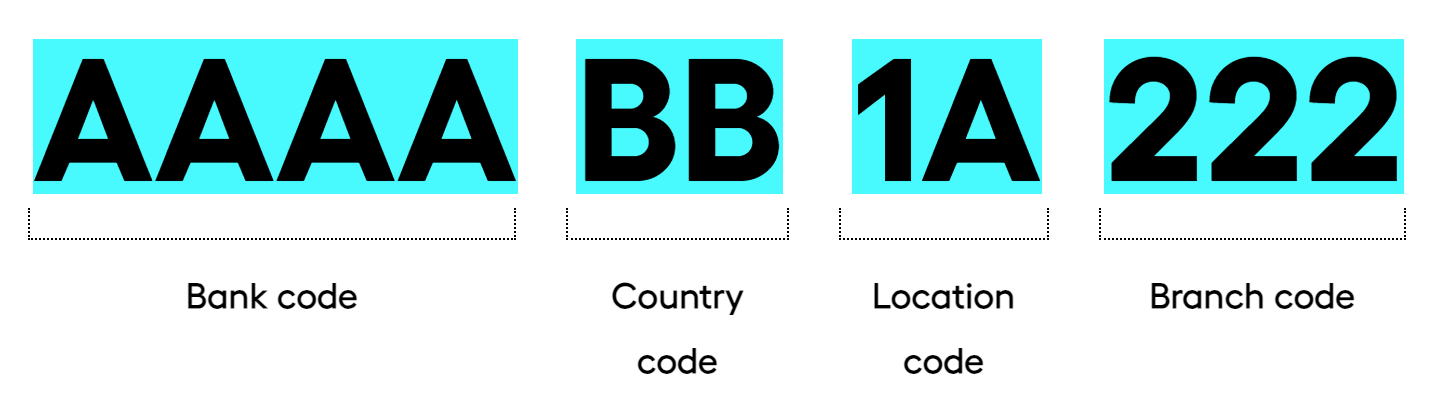
Example of a SWIFT code
AAAA
Bank code
BB
Country code
1A
Location code
222
Branch code
A SWIFT code is an 8-11 character code, which comprises of four parts:
- Bank code: Up to four letters (A-Z), usually a short version of the bank name
- Country code: Two letters (A-Z) indicating the country the bank is based in.
- Location code: Two characters made up of letters and numbers, indicating the bank’s head office location
- Branch code: Three numbers that identify the branch of the bank
When do you need the SWIFT code?
A SWIFT code is used in various types of bank transactions, especially in international money transfers. You are required to enter the SWIFT code of your recipient’s bank to make an international transfer, as it ensures your money goes to the right place.
Where to find a SWIFT code?
Your bank’s SWIFT code will usually be mentioned on your bank account statement. You can also use our online tool to find your bank’s SWIFT code before sending money overseas.
Why pay more?
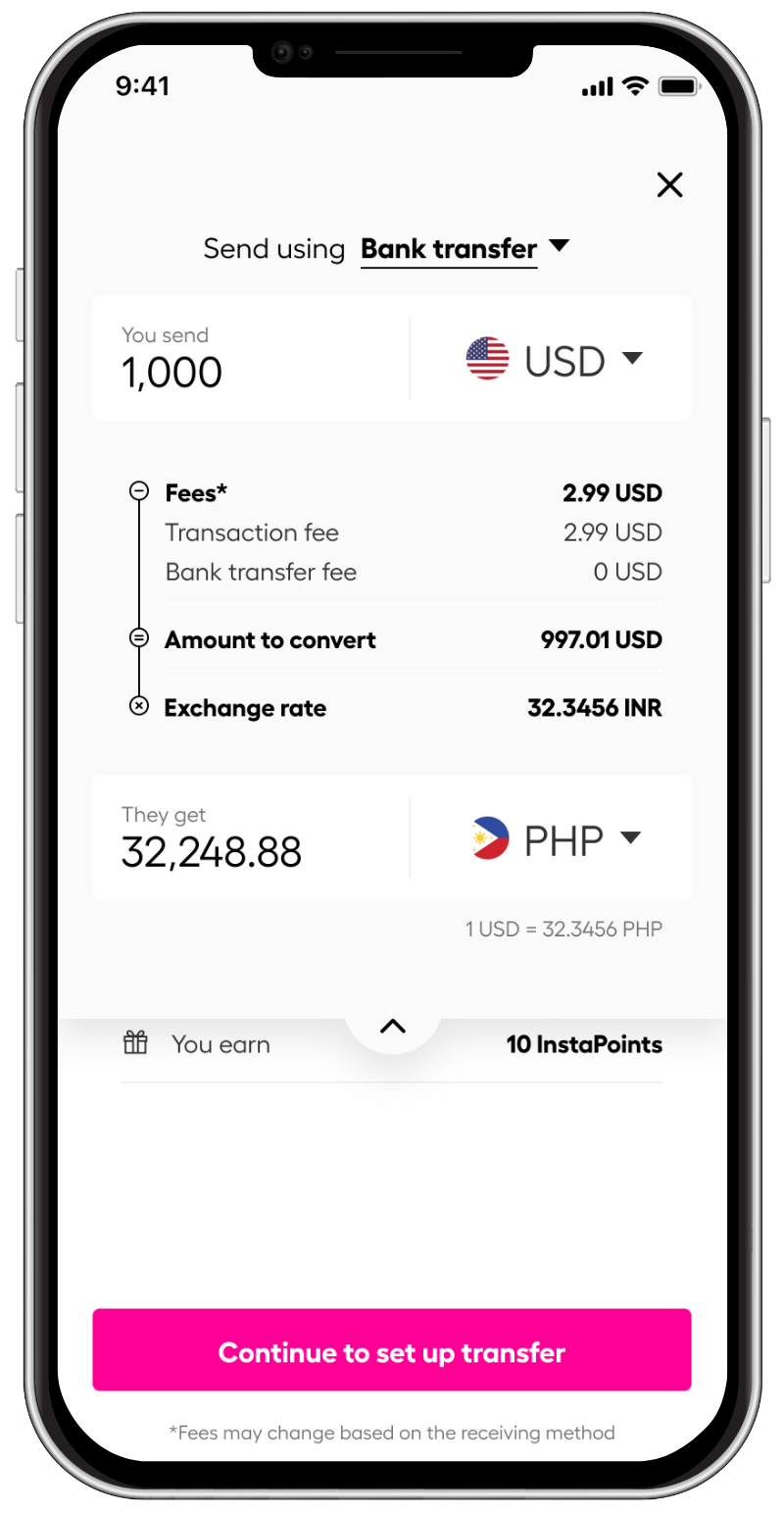
Did you know that sending money internationally through a bank may come with hidden fees and FX markups, leading to exorbitant charges without upfront transparency.
Try us on your next transfer for low-cost, transparent and simple money transfers!
Rates displayed for illustration purposes
FAQs
A SWIFT code, also referred to as BIC code (Bank Identifier Code), is a standard format that is used to identify banks and financial institutions when sending or receiving money abroad. As it is widely accepted, a swift code helps make simpler, faster and error-free international payments. Each unique code is made up of 8-11 characters that are mapped to a bank’s name, city and branch. To find your bank’s SWIFT code you can use our swift code finder.

You can understand the swift code through its unique digits. Here’s what they stand for
- Bank code: 4 letters (A-Z), usually a short version of the bank name.
- Country code: 2 letters (A-Z) indicating the country that the bank is based in.
- Location code: 2 digits made up of letters and numbers, indicating the bank’s head office location.
- Branch code: 3 numbers that indicate the bank’s branch.
Here’s the standard format of swift code digits

The last 3 digits of a bank swift code are 3 numbers that tell you which branch a particular bank account is held at. Bear in mind that some SWIFT codes may not include the last 3 digits.
BIC stands for “Bank Identifier Code” and consists of 8-11 characters that identify the bank or financial institution being used to make an international money transfer. If you’re sending money overseas, a BIC code helps to ensure that your transfer will reach the right recipient.
The term BIC code is often used interchangeably with SWIFT code. Bic or swift codes are essentially the same thing and are used for the same purpose of identifying the banks involved in international transactions.
SWIFT codes or BIC codes are assigned to banks by SWIFT – the Society of Worldwide Interbank Financial Telecommunication, a global entity which facilitates secure and reliable cross-border payments.
This depends on the bank, really. While some banks have the same bank swift code for all branches, others have a unique swift/bic code for every branch. If you don’t have the code for a particular branch, you can use the code of the bank’s head office or find the code using our swift code finder.
Yes, you need your bank’s SWIFT code to send or receive international money transfers. This includes international bank-to-bank transfers, wire transfers, and SEPA payments used for Euro transactions.
SWIFT code is required to make international transactions in most countries. If you don’t provide the swift or bic code, your transaction will most likely get rejected or cancelled. The only exception is money transfers made within European countries, where you need to provide the IBAN (international bank account number) instead of the SWIFT code.
If you provide the wrong SWIFT code while making an international transfer, your transaction will most likely get rejected or cancelled, and any amount deducted from your account will get reversed. Always be sure to enter the right SWIFT code for your transfer to go through smoothly.
Both SWIFT code and sort code are used for international money transfers, but they are not the same. A swift code has 8-11 characters, a mix of letters and numbers, and is used to identify banks internationally. A sort code consists of 6 numbers and is used to identify bank accounts within the United Kingdom.
Both SWIFT code and IBAN help to accurately send money across borders, but they are not the same. A swift code helps to identify a particular bank, while an IBAN (international bank account number) helps to identify an overseas bank account. Swift/Bic code has 8-11 characters while an IBAN has up to 34 characters. Some countries accept SWIFT code and others accept IBAN, but the two are often used together for international transfers.
Explore more
Partner programme
Earn commissions and offer low-cost overseas money transfers to your audience with the Instarem Affiliate Programme.
Press
Browse our official press releases for the latest news and updates.